Most puppy training fails because rewards are late, inconsistent, or accidentally reinforce the wrong behavior. The result is a frantic cycle of repeating cues, frustration, and “my puppy is stubborn” myths-costing weeks of progress and, often, expensive remedial sessions.
After coaching new owners through early training plans and reviewing what actually happens at home, I see the same pattern: good intentions, poor timing, and unclear criteria. Miss the first 8-12 weeks of habits, and you’re not “behind”-you’re rebuilding.
Below is a practical, fast-training reinforcement system: how to pick irresistible rewards, mark behavior precisely, raise difficulty without setbacks, and fade treats without losing reliability.
Marker Training Mastery: How to Pair Clickers, “Yes!” Cues, and Micro-Timing to Accelerate Puppy Learning
Most puppy training stalls come from marker drift: the click/“Yes!” lands 0.5-1.0 seconds late, accidentally reinforcing the wrong micro-behavior. Treat the marker as a precision timestamp, not praise.
- Condition the marker (60-120 reps): click or say “Yes!” then deliver food within 1 second, every time, until the marker itself triggers an immediate head-turn/expectation; no cues, no lures.
- Choose and standardize the marker: clickers offer consistent acoustics and faster onset; a “Yes!” cue works when hands are busy, but must be short, sharp, and identical in tone. Avoid “gooood” stretching-duration blurs the timestamp.
- Micro-timing workflow: mark the instant the criterion happens (eye contact, butt hits floor, paw touches mat), then feed after the marker-even if the puppy moves. For timing audits, record 60-120 fps video via Coach’s Eye and check whether the marker precedes the treat reach and aligns with the target frame.
Field Note: A client’s “sit” improved in one session after we reviewed slow-motion clips and moved her “Yes!” to the exact frame the hips tucked, not when the puppy’s head finally stopped bobbing.
High-Value Rewards That Actually Work: Treat Selection, Toy Play, and Real-Life Reinforcers to Build Reliable Behaviors Fast
Most “stubborn puppy” cases are actually low-value reinforcement: if the reward doesn’t outcompete scent trails, play, or proximity to people, compliance drops below 40% within three reps. A single treat type used everywhere also causes rapid satiation, so behavior collapses precisely when distractions rise.
- Treat selection: Use a 3-tier menu (kibble/soft treat/meat) and reserve Tier 3 for recalls, leash reactivity triggers, and first-time proofing; deliver 3-5 rapid pieces for jackpots, not one oversized treat.
- Toy play as currency: For high-drive pups, a 5-10 second tug with a clean “out” cue can beat food; end while the puppy still wants more to preserve motivating operations and prevent over-arousal.
- Real-life reinforcers: Pay with access-sniffing, greeting, doorway release, chasing a ball-by cueing “sit,” marking, then opening the environment; log what works per context using DogLog to avoid guessing.
Field Note: After a client tracked reinforcers in DogLog, we discovered their puppy ignored chicken only at the park, so we swapped to tug-for-recall and their response latency dropped from ~2.5s to under 1s within a week.
Shape, Capture, or Lure? Expert Positive Reinforcement Techniques to Teach Sit, Recall, and Leash Skills in Record Time
Most “fast puppy training” fails because handlers repeat cues while the puppy is still guessing, accidentally reinforcing latency and noise. If sit and recall aren’t landing within 1-2 seconds, your reinforcement timing and setup-not motivation-are usually the bottleneck.
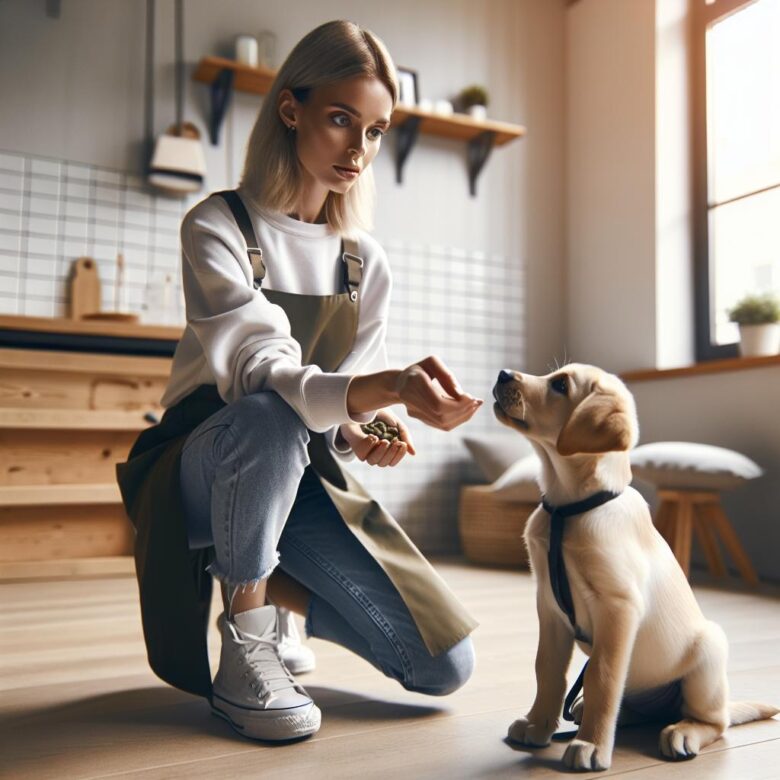
- Shape (precision behaviors): Mark micro-steps (hip shift → elbow bend → full sit) with a click/“yes,” deliver treat at seam of pants to keep the sit straight; for recall, reinforce first head-turn, then one step toward you, then full arrival to front.
- Capture (high frequency moments): Pay “free sits” and spontaneous check-ins throughout the day; log clean reps in DogLog to ensure you’re not biasing one context (kitchen) and failing outdoors.
- Lure (speed, not dependency): Use food magnet only 3-5 reps, then fade to an empty hand + reward from the other hand; for leash skills, lure into heel position, mark when leash is slack, and reinforce by moving forward (access) plus food.
Field Note: A client’s “stubborn recall” fixed in one session by switching from luring the puppy all the way in to shaping the initial head-turn and paying at knee level, cutting average response from ~4 seconds to under 1.5.
Q&A
FAQ 1: How do I choose the best rewards so my puppy learns faster?
Use rewards that match the difficulty and distraction level. In low-distraction settings, kibble or mild treats may work; in tougher situations (outdoors, around people/dogs), switch to high-value rewards (soft, smelly treats like chicken, cheese, or commercial training treats). Keep pieces pea-sized to avoid overfeeding and maintain speed. Test a few options and rank them; the “best” reward is the one your puppy consistently works for immediately.
- Rule of thumb: higher distraction = higher value reward
- Variety helps: rotate rewards to prevent boredom
- Non-food reinforcers: brief tug, fetch, praise, or access to sniffing-if your puppy truly prefers them
FAQ 2: What timing and markers should I use to make positive reinforcement effective?
Reinforce within 1-2 seconds of the desired behavior so your puppy links the reward to the correct action. Use a consistent marker (a clicker or a clear word like “Yes”) to pinpoint the exact moment the behavior happens, then deliver the reward right after.
- Marker first, reward second: the marker “captures” the behavior; the treat is the paycheck
- Be precise: mark the instant your puppy’s bottom hits the floor for “sit,” not after they stand up
- Short sessions: 3-5 minutes, multiple times daily, beats one long session
FAQ 3: How do I reduce treats without losing reliability, especially for recall and leash training?
Don’t remove rewards too early; instead, shift from continuous reinforcement (reward every correct response) to a variable schedule (reward unpredictably) after the behavior is consistent in the same environment. Keep “life rewards” (sniffing, greeting, moving forward) as reinforcement, and maintain occasional high-value jackpots for critical behaviors like recall.
|
Training Stage |
What to Do |
Goal |
|---|---|---|
|
Learning (new cue) |
Reward every success; low distractions |
Clear understanding of the behavior |
|
Building reliability |
Gradually add distractions; reward most successes |
Consistency across settings |
|
Maintenance |
Variable rewards; mix food + life rewards; occasional jackpots |
Strong response without constant treats |
- Recall tip: reward heavily when it matters most (coming away from distractions).
- Leash tip: reinforce slack leash by moving forward (access reward) plus occasional treats at your side.
- Avoid accidental extinction: if performance drops, increase reward frequency again and lower distractions.
Key Takeaways & Next Steps
Fast puppy training isn’t about “more reps”-it’s about cleaner timing and fewer mixed signals. Reinforcement works best when the puppy can predict exactly what earns the reward, every time, from every person in the home.
Pro Tip: The biggest mistake I still see is upgrading difficulty too quickly-longer duration, more distance, more distractions-before the puppy’s response is automatic. That’s how you create “sometimes” behaviors and accidental frustration. Lock in reliability first, then raise only one variable at a time.
Do this right now:
- Set a 3-minute daily timer on your phone labeled “Mark & Reward.”
- Record 10 clean reps of one skill and track success rate; don’t progress until you hit 8/10 for two days.

Dr. Ethan Caldwell is a pet wellness specialist and lifestyle expert dedicated to enhancing the quality of life for modern pets. With years of experience in animal care, nutrition, and behavior, he shares practical insights and premium living strategies to help pet owners provide healthier, happier, and more refined lifestyles for their companions.