
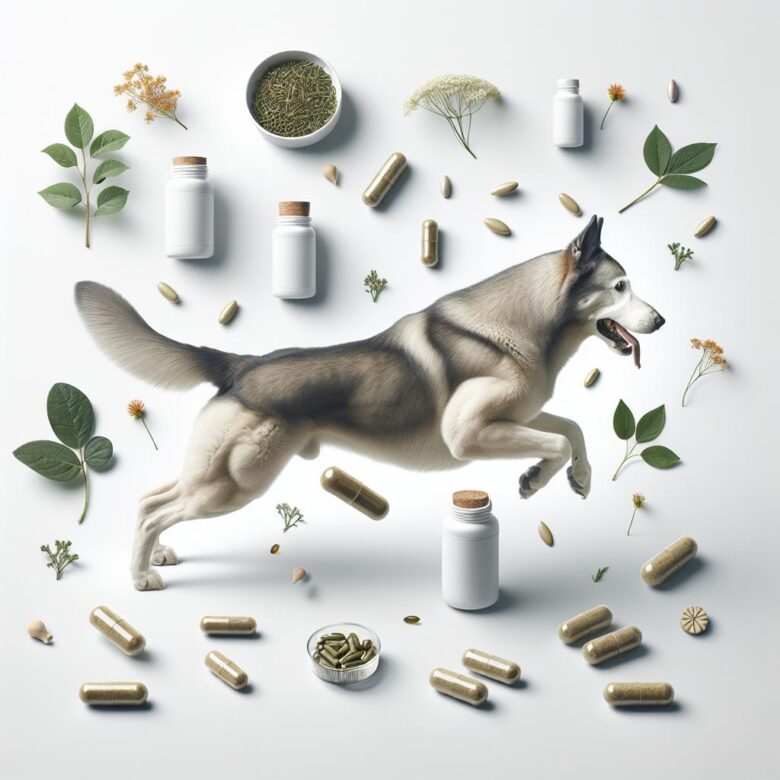
When an older dog starts slipping on floors, hesitating at stairs, or limping after short walks, it’s often mislabeled as “just aging”-and months of comfort get lost while joint damage and muscle wasting quietly progress.
In my work reviewing senior-dog mobility plans with veterinarians and rehab teams, I repeatedly see owners spend heavily on the wrong chews, under-dose quality ingredients, or miss supplement-medication conflicts that can trigger GI flare-ups and wasted time.
This article pinpoints which natural supplements actually matter for arthritis and stiffness (and which are marketing), the evidence-backed dosages and timelines to expect, and how to pair them with weight control and low-impact exercise.
Use this to build a safe, results-driven supplement stack that supports joint cartilage, reduces inflammation, and keeps your senior dog moving comfortably.
Glucosamine, Chondroitin & MSM for Senior Dog Arthritis: Evidence-Based Dosing, Timelines, and How to Choose a Quality Joint Supplement
Underdosing joint nutraceuticals is the #1 reason owners abandon them-glucosamine/chondroitin/MSM typically need 4-8 weeks at a true therapeutic dose before judging response. “All-in-one” chews often hide low actives behind large proprietary blends, so label math matters.
| Ingredient | Evidence-based daily dose (dogs) | Expected timeline / notes |
|---|---|---|
| Glucosamine (HCl or sulfate) | ≈20-30 mg/kg/day | Reassess at week 6-8; best paired with weight control and controlled exercise. |
| Chondroitin sulfate | ≈10-15 mg/kg/day | Similar timeline; look for specified sulfate form and mg-per-serving (not “complex”). |
| MSM | ≈50-100 mg/kg/day | Often noticed sooner (2-4 weeks) for stiffness; reduce if loose stool occurs. |
Choose products with a Certificate of Analysis, clear mg amounts for each active, and third-party quality marks (e.g., NASC); I routinely verify label claims by cross-checking COAs and batch IDs in Covetrus ordering notes. Field Note: A senior Lab’s “failed” glucosamine trial reversed once we discovered the chew delivered only 250 mg/day-after recalculating to 1,500 mg/day (plus 800 mg MSM), gait improved measurably by week 7.
Omega-3 Fish Oil for Canine Joint Inflammation: EPA/DHA Targets by Weight, Safe Brands, and Avoiding Vitamin A/D & Oxidation Pitfalls
Most “fish oil” joint plans fail because owners dose by total oil volume, not combined EPA+DHA, and they unknowingly buy oxidized product that worsens inflammation. Another frequent mistake is using cod liver oil, which can oversupply vitamins A/D in seniors with liver or endocrine comorbidities.
| Dog Weight | Daily EPA+DHA Target | Practical Capsule/Liquid Guide |
|---|---|---|
| 10 lb (4.5 kg) | ≈300 mg | ~1 “standard” 300 mg EPA+DHA softgel; split if GI upset |
| 30 lb (13.6 kg) | ≈900 mg | ~3 standard softgels or measured liquid matching labeled EPA+DHA |
| 60 lb (27 kg) | ≈1,800 mg | Concentrated oils reduce capsule load; confirm per-teaspoon EPA+DHA |
Choose products with third-party testing and a stated peroxide/anisidine or TOTOX specification, and store tightly capped, dark, and cool; discard if “fishy”/paint-like odor develops. Prefer anchovy/sardine-based oils with added mixed tocopherols; avoid cod liver oil unless a veterinarian is intentionally managing vitamins A/D. Use IFOS verified listings (or equivalent COA review) to screen for oxidation and heavy metals before recommending a brand to clients.
Field Note: A senior Labrador’s stiffness improved only after we replaced an untested cod liver oil with an IFOS-listed concentrate and re-dosed to 70 mg/kg/day EPA+DHA, correcting a 4× underdose hidden by “1000 mg fish oil” labeling.
Turmeric (Curcumin), Green-Lipped Mussel & Collagen: When “Natural” Helps, When It Doesn’t, and Vet-Approved Stacking for Better Mobility
Most “natural joint chews” fail because they use under-dosed curcumin and heat-damaged collagen, so owners see no gait change after 4-8 weeks. Another common miss: stacking too many anti-inflammatories and triggering GI upset before pain improves.
| Supplement | When it helps | When it doesn’t / cautions |
|---|---|---|
| Turmeric (curcumin) | Best for low-grade inflammatory arthritis if paired with bioavailability aids (e.g., phospholipid complex); monitor mobility scores in PetPace. | Poor absorption in “plain powder”; avoid/monitor with anticoagulants, gallbladder disease, or peri-surgery (bleeding risk). |
| Green-lipped mussel (GLM) | Useful for OA pain/stiffness; combines omega-3s and glycosaminoglycans; often complementary to glucosamine/chondroitin. | Not ideal for shellfish allergy; can cause soft stool-start low, increase over 10-14 days. |
| Collagen (UC-II or hydrolyzed) | UC-II targets immune-mediated cartilage irritation; hydrolyzed collagen supports connective tissue as part of a protein-adequate diet. | Won’t “rebuild” severe bone-on-bone OA alone; watch calories in small seniors, and verify third-party testing. |
Field Note: After a Labrador on carprofen developed diarrhea from an aggressive GLM+curcumin jump, I fixed it by halving doses, adding UC-II nightly, and re-titrating one product every 7 days while tracking step-count trends in PetPace.
Q&A
FAQ 1: Which natural supplements have the best evidence for improving mobility and joint comfort in senior dogs?
The strongest, most consistently supported options include:
- Omega-3 fatty acids (EPA/DHA from fish oil): Help reduce inflammatory signaling and may improve stiffness and activity levels. Prioritize products that list EPA + DHA amounts (not just “fish oil mg”).
- Glucosamine + chondroitin: Commonly used for osteoarthritis support; benefits are typically modest but may help some dogs, especially with long-term use.
- Green-lipped mussel (Perna canaliculus): Natural source of omega-3s and glycosaminoglycans; some dogs show improved comfort and mobility.
- Undenatured type II collagen (UC-II): Supports joint function via immune tolerance mechanisms; often used for osteoarthritis and may help reduce discomfort.
- Boswellia serrata and turmeric/curcumin: Botanicals with anti-inflammatory potential; best used as adjuncts and only in pet-specific formulations with transparent dosing.
FAQ 2: How long do joint supplements take to work, and how do I know if they’re helping?
Most joint supplements require a consistent trial before you can judge results:
- Omega-3s: Often 3-6 weeks to notice improved stiffness or willingness to exercise.
- Glucosamine/chondroitin: Commonly 4-8 weeks; some dogs need up to 12 weeks.
- UC-II: Often 4-8 weeks, sometimes sooner.
To assess benefit, track objective changes for 2-4 weeks before and after starting:
- Time to rise from lying down
- Stair climbing willingness
- Length of comfortable walks
- Limping frequency (e.g., “days per week”)
- Need for assistance getting into the car or onto furniture
If there’s no measurable improvement after an adequate trial at an appropriate dose, switching to a different evidence-based ingredient (rather than stacking many at once) usually provides clearer answers.
FAQ 3: Are “natural” joint supplements safe for senior dogs, and what interactions should I worry about?
“Natural” does not automatically mean risk-free-senior dogs often have kidney, liver, heart, or GI sensitivities, and many take medications. Key safety points:
- Fish oil (omega-3s): Can cause diarrhea or pancreatitis risk in susceptible dogs; may increase bleeding tendency at higher doses-use caution if your dog is on NSAIDs, has a bleeding disorder, or is scheduled for surgery.
- Turmeric/curcumin: May upset the stomach and can interact with anticoagulants/antiplatelet drugs; avoid high-dose or poorly formulated products.
- Boswellia: Generally well tolerated but can cause GI upset; use caution if your dog has chronic GI disease or is on multiple anti-inflammatories.
- Quality control: Choose products with third-party testing (e.g., NSF, USP, or veterinary-focused quality programs) and clear labeling of active ingredients.
Seek veterinary guidance promptly if your dog has sudden worsening pain, pronounced lameness, weakness in the rear legs, or adverse effects (vomiting, diarrhea, appetite changes), or if your dog already takes prescription pain or arthritis medications.
Expert Verdict on Natural Supplements for Senior Dogs: Improving Mobility and Joint Health
Joint supplements can help senior dogs stay comfortable, but they’re not “set-and-forget.” Product quality, dosing accuracy, and realistic timelines are what separate meaningful improvement from wasted money.
Pro Tip: The biggest mistake I still see is stacking multiple joint products and accidentally doubling actives (especially glucosamine, MSM, omega-3s), which can trigger GI upset or muddy what’s actually working. Change one variable at a time, and reassess after 4-8 weeks-earlier decisions are often noise.
Right now, open your phone and start a simple “mobility log” with three weekly check-ins: time to rise, stair hesitation (0-5), and post-walk stiffness (0-5). Bring that log-and the exact supplement labels-to your next vet visit for targeted adjustments.

Dr. Ethan Caldwell is a pet wellness specialist and lifestyle expert dedicated to enhancing the quality of life for modern pets. With years of experience in animal care, nutrition, and behavior, he shares practical insights and premium living strategies to help pet owners provide healthier, happier, and more refined lifestyles for their companions.